
Oh Goodness, I Have Turned Into My Mother!
By Stevie Barnett
I used to be absolutely certain that I would never turn into my mother.
Not that there was anything particularly wrong with my mother, you understand. But she had some very definite ideas about how children should behave, and I was equally definite that I would do things differently.
I distinctly remember her saying, “Never mind why. Just do what you're told.”
I thought this was outrageous.
When I had children, I decided, I would never resort to such an authoritarian response. I would be a patient, understanding mother who explained her reasoning calmly and logically. My children would grow up appreciating the value of sensible discussion.
And, for a while, this worked beautifully.
Admittedly, my firstborn was still at the stage where the most challenging question was whether to have another biscuit.
Then the cute toddler stage came to an end.
And one afternoon, after what felt like the four-hundredth “But why?”, I heard myself announce, in a voice I recognised with some alarm:
“Never mind why. You'll do it because I told you to.”
There she was.
My mother.
And once she'd made her first appearance, there was no stopping her.
Before long, I was saying things like “Do you think money grows on trees?” and “Were you born in a barn?”
I also discovered that I could detect an open door from three rooms away, and that nothing brings out a person's inner dictator quite like finding every light in the house switched on.
I had become the sort of woman who announced, “I'm not heating the whole street!”
Which was particularly impressive given that nobody had suggested I should.
“Apparently my mother had been waiting patiently inside me all along.”
And then there were the occasions when I was absolutely convinced my mother was wrong.
University, for example.
As the eldest child, I was expected to go. My mother hadn't had the opportunity herself, and she was deeply disappointed when I announced that I didn't want to.
I couldn't see the point. Unless you had a particular career in mind that required a degree, why spend several years studying something you might never use?
It seemed a perfectly sensible argument to me. My mother was not impressed.
At the time, I thought she simply didn't understand my very logical reasoning. I was young, I knew what I wanted, and naturally I had an exceptionally clear understanding of how life worked.
Which is one of the great advantages of being young. You can be completely certain about things you know almost nothing about.
It took me rather longer to appreciate what my mother had understood all along.
University wasn't just about qualifications. It was about meeting different people, encountering different ideas and discovering possibilities you hadn't even known existed.
She could see that it might shape the direction of my life in ways I couldn't possibly predict.
And, annoyingly, she was right. I do wish mothers wouldn't do that.
It makes maintaining one's youthful indignation so much more difficult.
Of course, the transformation didn't stop when the children grew up.
Oh no.
It simply moved on to other areas of life.
Take the business of keeping things.
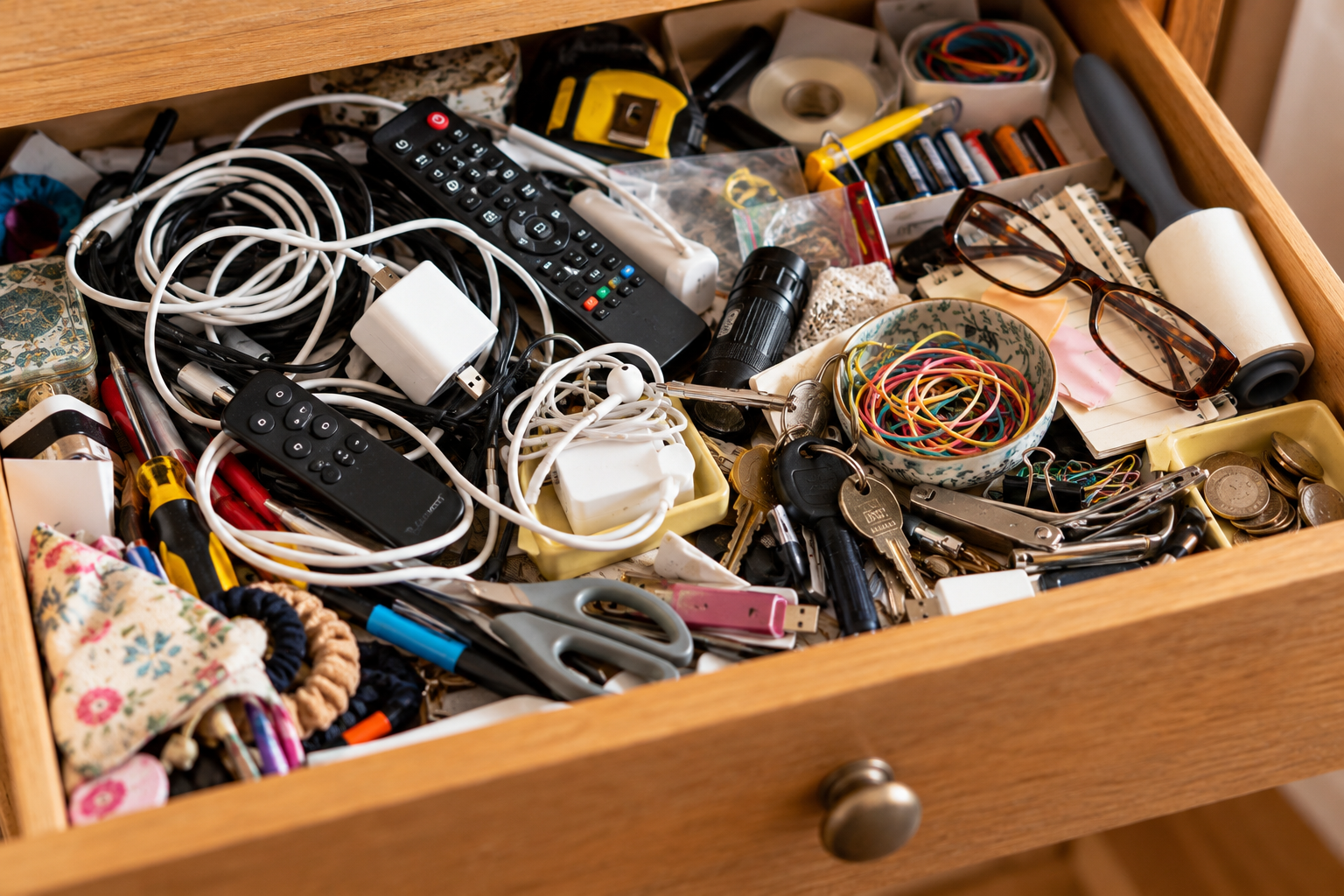
My mother had a drawer full of items that might come in useful one day.
Buttons. Rubber bands. Bits of string. Gift bags. A collection of unidentified keys.
I used to wonder why she didn't throw the lot away.
Now I have my own drawer.
It contains approximately seventeen charging cables, a remote control belonging to something we no longer own, three spectacle cases and a small plastic object whose purpose has remained a mystery for at least six years.
Naturally, I can't throw any of it away. It might come in useful.
I've also developed some quite alarming opinions about household matters.
I now care whether towels are folded properly.
I notice when someone leaves a teaspoon in the sink instead of putting it in the dishwasher.
And I find myself becoming almost homicidal when my husband kicks off yet another pair of shoes right in the middle of the living room.
At which point I really ought to be issued with a cardigan and a packet of boiled sweets.

Perhaps the most worrying development, though, is that I now understand why my mother used to say some of these things.
This is deeply inconvenient.
Because it means she may occasionally have had a point.
Not about everything, obviously. Let's not get carried away.
But I can now see that repeatedly explaining the same perfectly reasonable instruction to a determined seven-year-old is not necessarily the wonderful bonding experience I once imagined.
Sometimes you just want someone to put their shoes on.
Without a debate.
And preferably before next Thursday.
So yes, I've turned into my mother.
Or at least certain parts of her.
And the really satisfying thing is that I've now lived long enough to hear my own daughter saying some of the very things she once swore she'd never say to her children.
Naturally, I haven't pointed this out.
Well, not very often.
There are few pleasures quite as satisfying as watching the next generation discover that their mothers may, occasionally, have had a point.
Not that I'd ever say “I told you so.”
My mother would, though.
A little more from Stevie
If you've enjoyed this article, you might like The Joyful Retirement — an online lifestyle magazine for women who believe retirement should be full of interesting things to discover, useful little ideas and plenty of reasons to smile.
There's always something new to enjoy, with fresh articles and features added throughout the month.
Come and have a look around The Joyful Retirement.